
Hiya!
Dear readers, welcome back.
I hope everyone is healthy and keeping safe as we fight the ongoing dreadful pandemic. This morning I woke up and thought staying at home doesnot actually mean doing nothing therefore, I decided to write another post that is also very interesting and scientific.
This post, is about physiotherapy management in breast cancer starting with introduction,, burden of the problem, physiotherapy (exercises) and lastly conclusion.
The main purpose is to provide evidence based information to patients, health professionals and the entire public about the advantages of physiotherapy (exercises) in the management of patients with breast cancer focusing on the cardiorespiratory element of their problem (s).

IS IT ONLY THE PINK RIBBON?
Breast cancer is a disease that is due to lack of control during cell division and growth of the breast tissue that may arise from the lobules, duct, connective and lymphatic tissues and can be invasive lobular or ductal carcinoma (Centre for Disease Control and Prevention, 2018)
The cancer cells may spread to other different parts of the body such as lungs, bones, brain, bowel, liver through blood and lymph vessels and cause secondary mestastases. Clinically, breast cancer presents with a painless lump, retraction of the nipple , darkening of the breast skin and dimpling, bloody nipple discharge as well as swelling and enlargement of the lymph nodes. (Goodman et al, 2007 ).
In the course of one decade there has been an increase of almost 2 million new breast cancer cases globally. (Liu et al, 2019). The global incidence of breast cancer differs from country to country (Momenimovahed el al, 2019). This could be due to geographical and cultural differences across the globe. According to National Health Service, 1 in every 8 women in United Kingdom has breast cancer and the burden of breast cancer has increased by 7% in the the past 10 years (National Health Service UK, 2019).
Compared to Tanzania, breast cancer is the second most common cancer in women between the age of 45 to 55 with an incidence of 13%. The risk factors for breast cancer include age, smoking, alcoholism, nulliparity in women, family history of breast cancer as well as previous exposure to radiation (Tanzania National Cancer Treatment Guidelines, 2020). The incidence of breast cancer in Tanzania is almost double the United Kingdom, this could be due to the advancement in early diagnosis and treatment of breast cancer in United Kingdom.
Breast cancer is not as rare as it seems however is mainly diagnosed on late stages hence the prognosis tends to be poor and also the incidence has been increasing at the mean age of 61 years (Co et al, 2020). Male breast cancer In Tanzania has been reported to be ten times higher than many parts of the world. Not only that but also breast cancer patients are mostly diagnosed when the disease has highly advanced (Burson et al, 2010). This could be due to high rates of physical inactivity and hence obesity that increases the likelihood of developing breast cancer.

THE BURDEN
Breast cancer not only affects the quality of life of an indivial but also imposes serious economical burden for breast cancer treatment is high causing problems with jobs and debts.The treatment costs for breast cancer tends to increase as the stage of the breast cancer advances. Treatment of breast cancer can involve medical treatment such as surgery, radiotherapy, chemotherapy and hormone therapy as well as physiotherapy. The medical treatments can have various complications such as musculoskeletal conditions, neuropathies, fatigue, weakness, overweight, lymphoedema, anxiety, sleep disturbance as well as reduced cardiorespiratory fitness (Greenup, 2019).
The question is, does physiotherapy help with cardiorespiratory complications of breast cancer? what is the management?

EXERCISES: THE SAFER PILL
The has been robust research carried out to examine the role of physical activity and exercises in improving cardiorespiratory fitness as well as other breast cancer complications such as fatigue and lympoedema. The main types of exercises highlighted by research and guidelines are aerobic exercises such as swimming, walking, running, resistance exercises such as lifting weights, resistance exercises, flexibility exercises such as yoga, and stretching. Exercises tend to improve the quality of life, cardiorespiratory fitness and fatigue in patients with breast cancer (Travier et al, 2015). However, a randomised controlled trial suggested that exercises should start early and include 18 weeks exercise programme that is when there will be significant increases in cardiorespiratory fitness and strength (McNeely et al, 2006).
A systematic review of systematic reviews that examined 37 reviews of both randomised clinical trials and non randomised clinical trials highlighted that strongest evidence is around exercise as the the most effective rehabilitation intervention among breast cancer patients and has the potential to improve the reduced cardiorespiratory fitness in this group (Olsson Moller et al, 2019). This concurs with a systematic review in the same year, that included 14 randomised controlled trials and 1 observational study on home based physical activity programme greater effect on improving overall physical activity and cardiorespiratory fitness levels after breast cancer patients have undergone chemotherapy and or radiotherapy (Coughlin et al, 2019).

GRAB YOUR TRAINERS!!
A systematic review of 14 studies concluded that exercise is best intervention to improve cardiorepiratory fitness in breast cancer patients with [95% confidence interval 01.21-12.03]. Despite small sample size the outcome measures were all positive supporting the review conclusion (Syka et al, 2015). This is similar to a cochraine review that involved 63 clinical trials, randomided 5761 women with breast cancer after chemotherapy where by 28 did aerobic exercise only, 21 did aerobic and resistance exercises and 7 did resistance training only. There was small to moderate imporevement in cardiorespitory fitness and self reported physical activity among these women with breast cancer with [95% confidence interval 0.05-0.79] and [95% confidence interval 0.08-0.93 respectively], (Lahart et al, 2018). However, the trials differed in the modes, frequencies, intensity, time and outcome measures.
According to recent evidence, the most effective exercise programme to train cardiorespiratory fitness in breast cancer patients is that which includes both aerobic and resistance exercises as suggested by many guidelines such as American College of Sports and Medicine. But there has been conflicting evidence example a systematic review of 28 randomised controled trials which concluded that resistance training or resistance training with cardiovascular endurance…number of participants involved for follow up not clear (Gebruers et al, 2019). A systematic review that reviewed 8 studies whereby 4 aerobic, 2 strengthening exercises, 2 mixed both aerobic and strengthening exercises was unconclusive which exercise is most effective (Wloch et al, 2018). This may be due to the fact that the review only focused on postmastectomy women hence limited evidence.
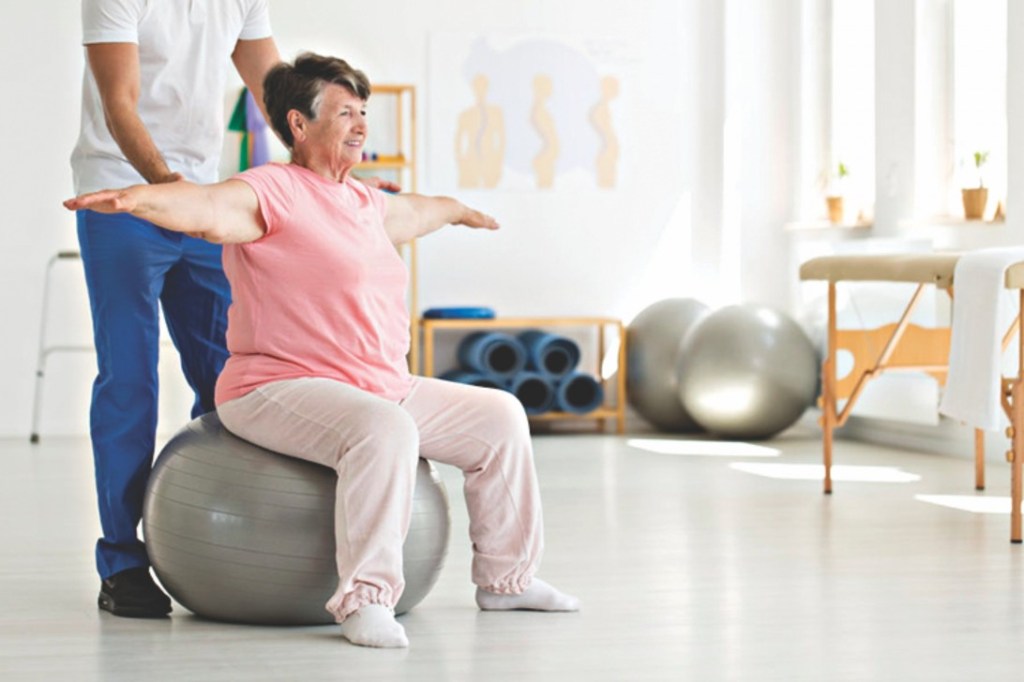
A systematic review of 14 studies [95% confidence interval 0.23- 0.67] highlighted that home and community based physical activity is effective intervention however benefits are temporary. This result may be due to low sample size of 83 participants in the studies that were included in the review (Swartz et al, 2017). On the next year, another systematic review of 29 randomised controlled trial [95% confidence interval 0.11- 0.32] summarized that distance based physical activity intervention lacks evidence on its effectiveness as a reult of small sample size, statistical power and intervention effects (Groen et al, 2018). On the whole, many guidelines have suggested supervised treatment programmes.
Breast cancer patients should train from moderate to high intensity training inorder for maximal cardiorespiratory fitness improvement. A systematic review of studies for a period of 25 years studies summarized that moderate intensity exercise with aerobic and resistance or mainly resistance improves quality of life , cardiorespiratory fitness, fatigue and depression (Alizadeh et al, 2019). This was contrary to a randomised controlled trial that summarized high intensity exercises increases cardiorespiratory fitness [P=0.05] in breast cancer patients on hormone therapy (Battaglini et al, 2014).
Flexibility exercises such as yoga exercises per se are not quite beneficial in training cardiorespiratory fitness among breast cancer patients. A Cochraine review of 24 randomised clinical trials involving 2166 participants also suggested that there is very low quality of evidence around yoga exercises being as effective as other exercises the possibility of substituting yoga with other exerise regimen such as resistance and bring about the desired effect that is cardiorespiratory fitness training ( Cramer et al, 2017) The results of this study can be trusted because the bias in the studies that were included was extremely low.
In order to improve cardiorespiratory fitness exercise programme should involve both aerobic and resistance exercises for best outcome.The aerobic exercise should be moderate to high intensity at least three times per week for twenty to forty minutes in each exercise session. In addition to this, should also execute moderate to high intensity resistance training at least two to three times a week with two sets between eight to twelve repitions of the major groups of muscles (American College of Sports Medicine, 2019).

ON THE WHOLE…
There is compelling evidence around the effectiveness of physical activity and exerices in improving cardiorespiratory fitness among breast cancer patients that is significantly reduced as a complication of the disease as well has its aggresive treatment methods. This calls the attention of physiotherapists to begin rehabilitating breast cancer patients as early as possible and before they have started medical treatment for better prognosis of this group of patients.
It is important to make sure that exercise testing is in line with the best available evidence for results precision but is also practical and applicable in local setting . This fosters effective planning of patient’s management as well as follow up.
Also, exercise prescription should be individualized to the patient and follow the FITT principle of frequency, intensity, time and type of exercise prescribed to the patient.
Thank you for reading!!
REFERENCES:
National Cancer Treatment Guidelines of United Republic of Tanzania (2020). Retrieved from cancerSTGTz
Drouin, J. (2015) ‘Exercise Testing and Training Considerations for Cancer Survivor Rehabilitation’.
Ferzoco, R. M. and Ruddy, K. J. (2016) ‘The Epidemiology of Male Breast Cancer’, Current Oncology Reports, pp. 1–6. doi: 10.1007/s11912-015-0487-4.
Taira, N. et al. (2016) ‘The Japanese Breast Cancer Society clinical practice guidelines for epidemiology and prevention of breast cancer, 2015 edition’, Breast Cancer. Springer Japan, 23(3), pp. 343–356. doi: 10.1007/s12282-016-0673-8.
Wirtz, P. and Baumann, F. T. (2018) ‘Physical Activity, Exercise and Breast Cancer – What Is the Evidence for Rehabilitation, Aftercare, and Survival? A Review’, Breast Care, 13(2), pp. 93–101. doi: 10.1159/000488717.
Jung, A. Y. et al. (2019) ‘Pre- To postdiagnosis leisure-time physical activity and prognosis in postmenopausal breast cancer survivors’, Breast Cancer Research. Breast Cancer Research, 21(1), pp. 1–11. doi: 10.1186/s13058-019-1206-0.
Abdelwahab Yousef, A. J. (2017) ‘Male Breast Cancer: Epidemiology and Risk Factors’, Seminars in Oncology, pp. 267–272. doi: 10.1053/j.seminoncol.2017.11.002.
Gucalp, A. et al. (2019) ‘Male breast cancer: a disease distinct from female breast cancer’, Breast Cancer Research and Treatment, pp. 37–48. doi: 10.1007/s10549-018-4921-9.
Klassen, O. et al. (2014) ‘Cardiorespiratory fitness in breast cancer patients undergoing adjuvant therapy’, Acta Oncologica, 53(10), pp. 1356–1365. doi: 10.3109/0284186X.2014.899435.
Co, M. (2020) ‘Delayed presentation , diagnosis , and psychosocial aspects of male breast cancer’, (January), pp. 1–5. doi: 10.1002/cam4.2953.
Kim, J., Choi, W. J. and Jeong, S. H. (2013) ‘The Effects of Physical Activity on Breast Cancer Survivors after Diagnosis’, Journal of Cancer Prevention, 18(3), pp. 193–200. doi: 10.15430/jcp.2013.18.3.193.
Freitas-Silva, R. et al. (2010) ‘Comparison of quality of life, satisfaction with surgery and shoulder-arm morbidity in breast cancer survivors submitted to breast-conserving therapy or mastectomy followed by immediate breast reconstruction’, Clinics. doi: 10.1590/
Patel, A. V. et al. (2019) ‘American College of Sports Medicine Roundtable Report on Physical Activity, Sedentary Behavior, and Cancer Prevention and Control’, Medicine and science in sports and exercise. doi: 10.1249/MSS.0000000000002117.
Schmitz, K. H. et al. (2010) ‘American college of sports medicine roundtable on exercise guidelines for cancer survivors’, Medicine and Science in Sports and Exercise. doi: 10.1249/MSS.0b013e3181e0c112.
Levangie, P. K. and Drouin, J. (2009) ‘Magnitude of late effects of breast cancer treatments on shoulder function: A systematic review’, Breast Cancer Research and Treatment. doi: 10.1007/s10549-008-0246-4.
Pidlyskyj, K. et al. (2014) ‘Exploring aspects of physiotherapy care valued by breast cancer patients’, Physiotherapy (United Kingdom). doi: 10.1016/j.physio.2014.03.006.McAnaw, M. B. and Harris, K. W. (2002) ‘The role of physical therapy in the rehabilitation of patients with mastectomy and breast reconstruction’, Breast Disease. doi: 10.3233/BD-2002-16122.
 PHYSIO REFLECTIONS